

















Identity built over time
Customer profiles grow continuously across sessions, devices, and channels, before and after a shopper identifies themselves.
Unify customer, commerce, and journey data into a single, retail-ready data warehouse, built for activation across campaigns, channels, and on-site experiences.
Powering Customer Experiences for Leading Retailers Globally

















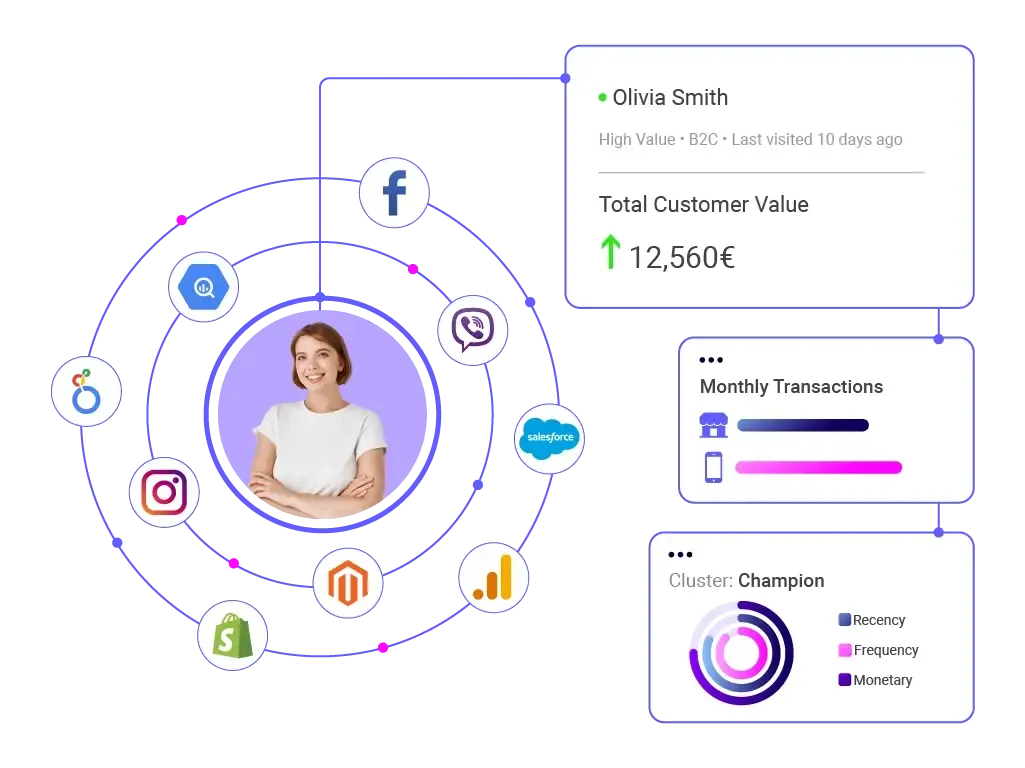
Your data shouldn't require a technical team to unlock. ContactPigeon unifies web behavior, engagement, and transaction data into one retail-ready intelligence layer that connects seamlessly with your existing stack.
Powered by a built-in Google BigQuery cloud foundation, it delivers scalable analytics and AI without infrastructure overhead
Bring order to fragmented data and unify customer insights across touchpoints.
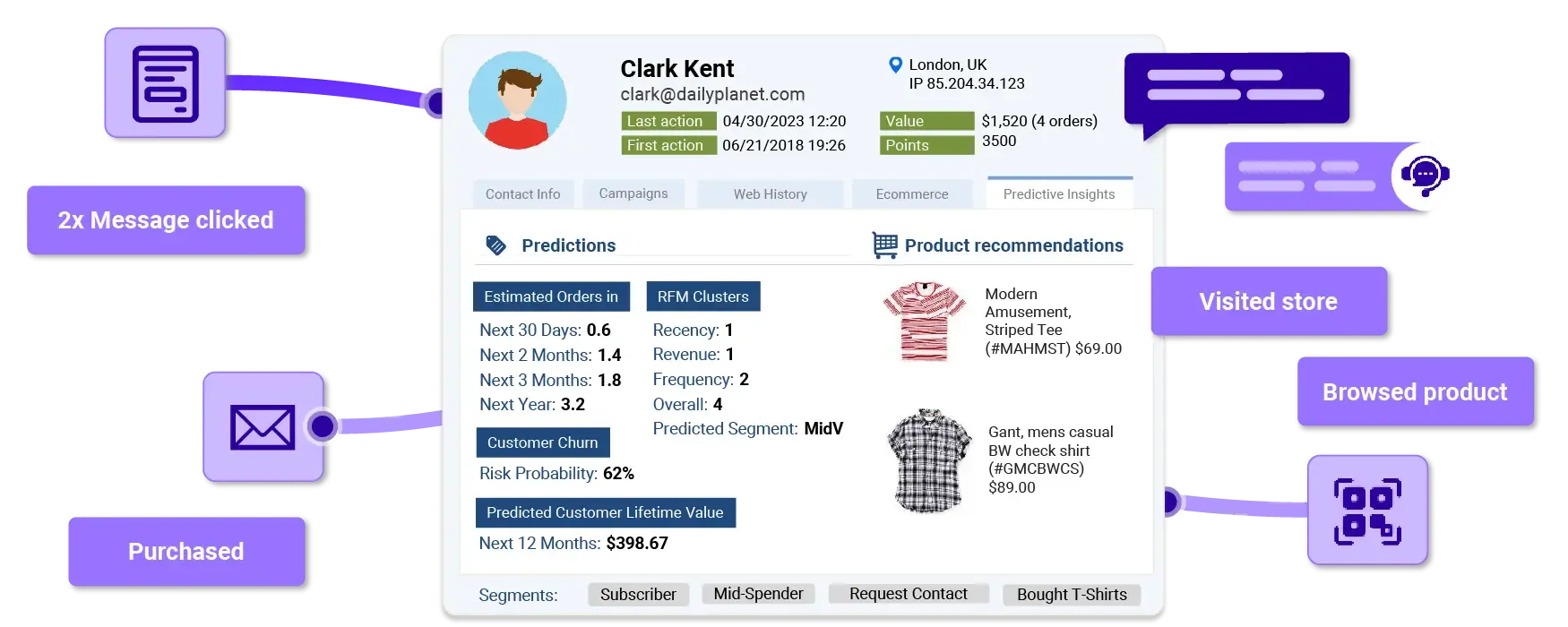
Customer profiles grow continuously across sessions, devices, and channels, before and after a shopper identifies themselves.
Track anonymous behavior and retroactively connect visits once a profile becomes known.
Capture high-intent behavioral signals even when shoppers are anonymous, so valuable context is never lost.
Harness AI intelligence to understand what customers want next and deliver experiences that feel effortless and personal.
Key capabilities include:
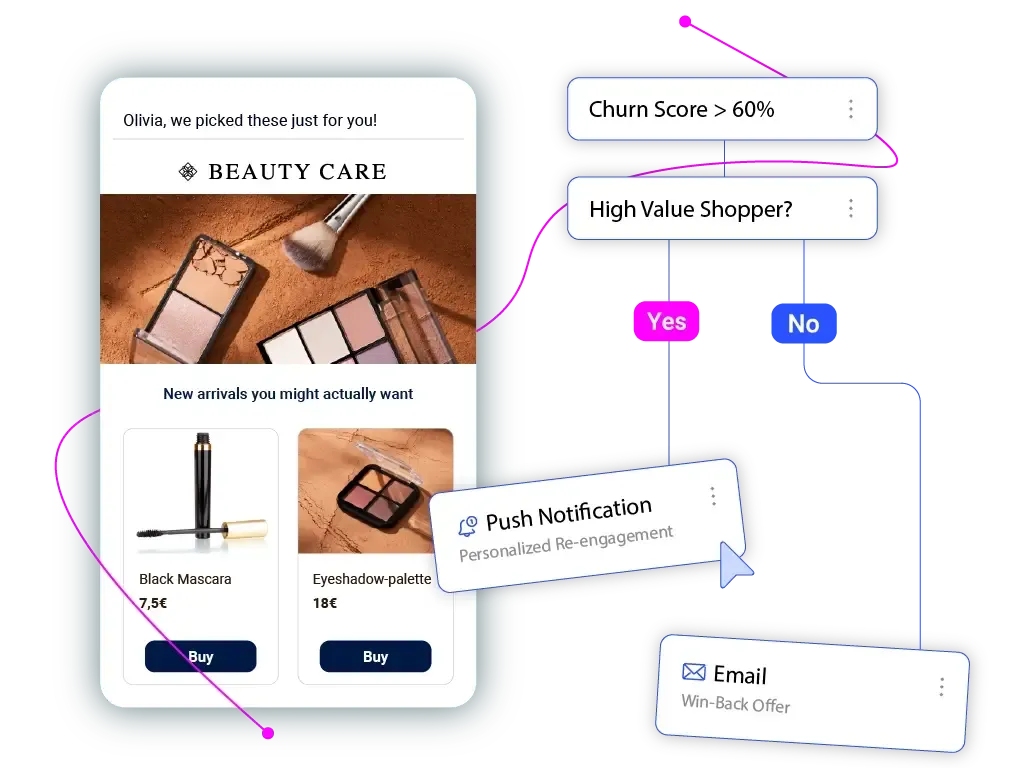
A CDP only creates value when it drives action. With built-in integration with Journeys, ContactPigeon turns profiles and segments into coordinated experiences across every channel.
Explore channelsTurn insight into action with a retail-first Customer Data Platform built for real-time decisions and measurable growth.
Trusted by 500+ brands globally. Rated Top Customer Satisfaction on G2.
Pre-built dashboards give teams instant clarity into what's working, what's moving revenue, and where journeys need attention.
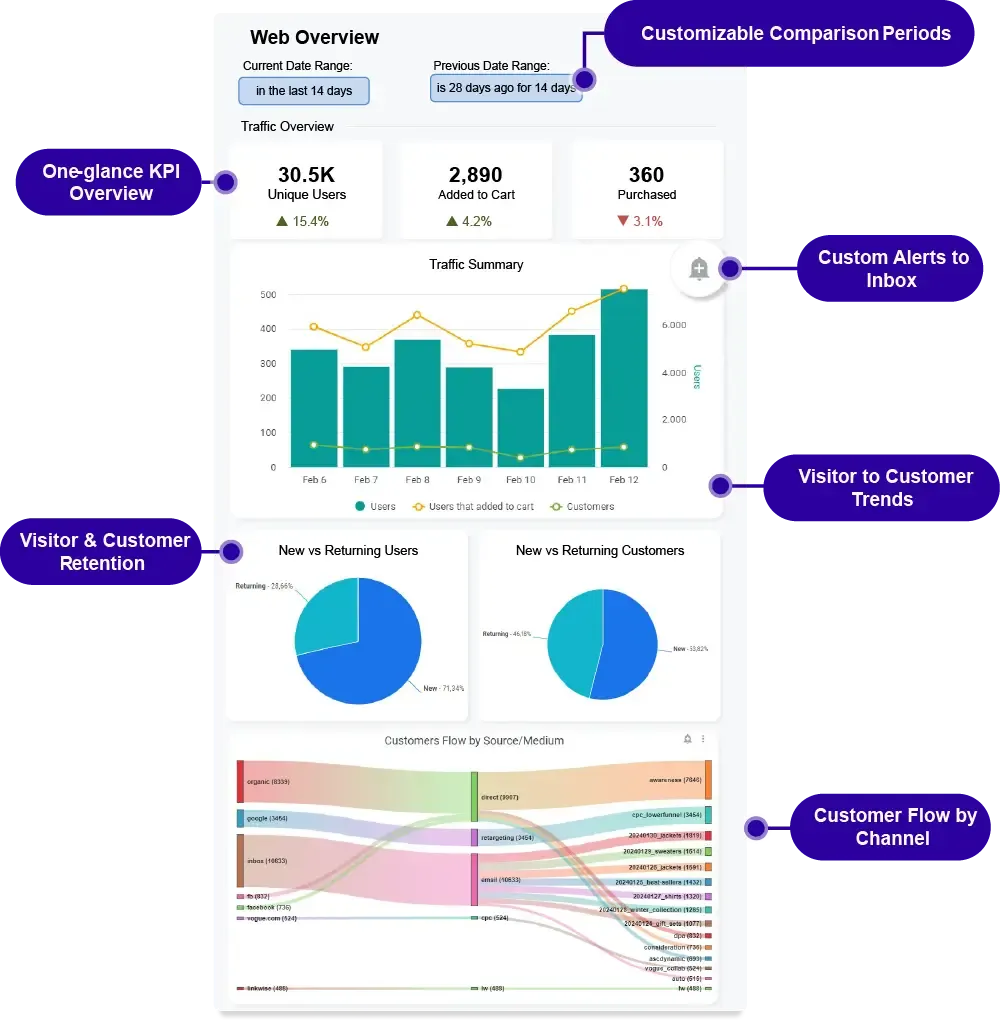
See what drives conversions, retention, and engagement. Discover which channels bring your most valuable traffic.
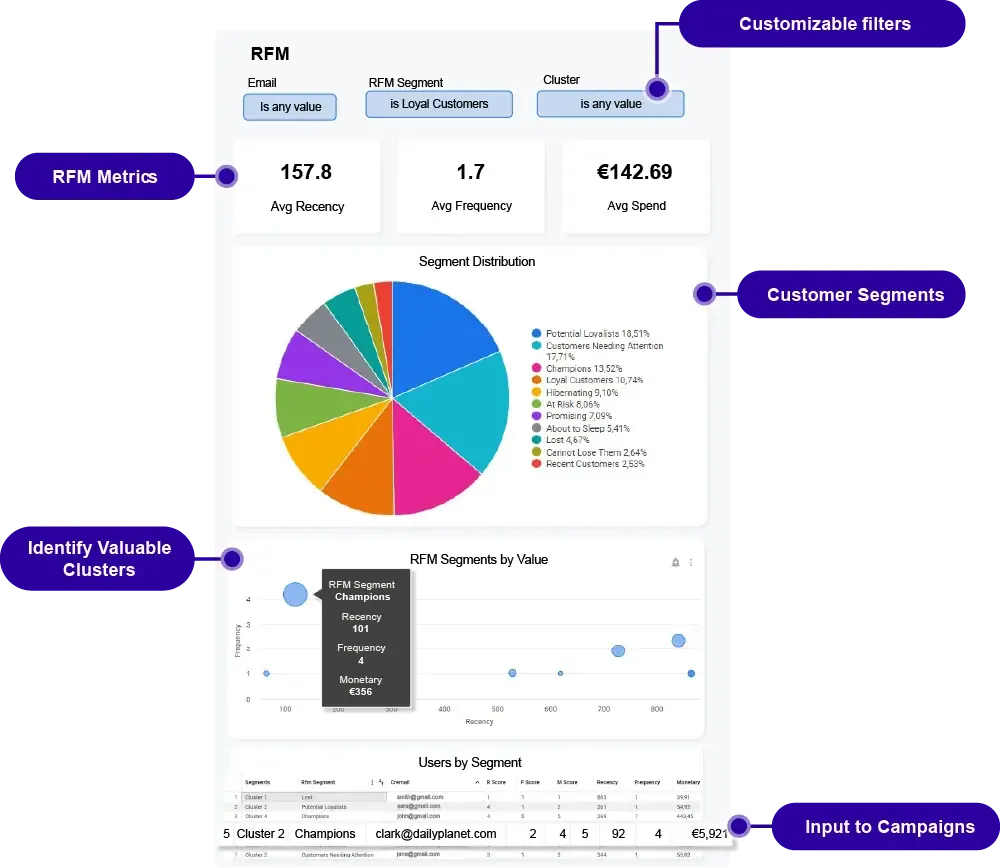
Enhance audience targeting with RFM analysis that clusters customers by recency, frequency, and monetary value.
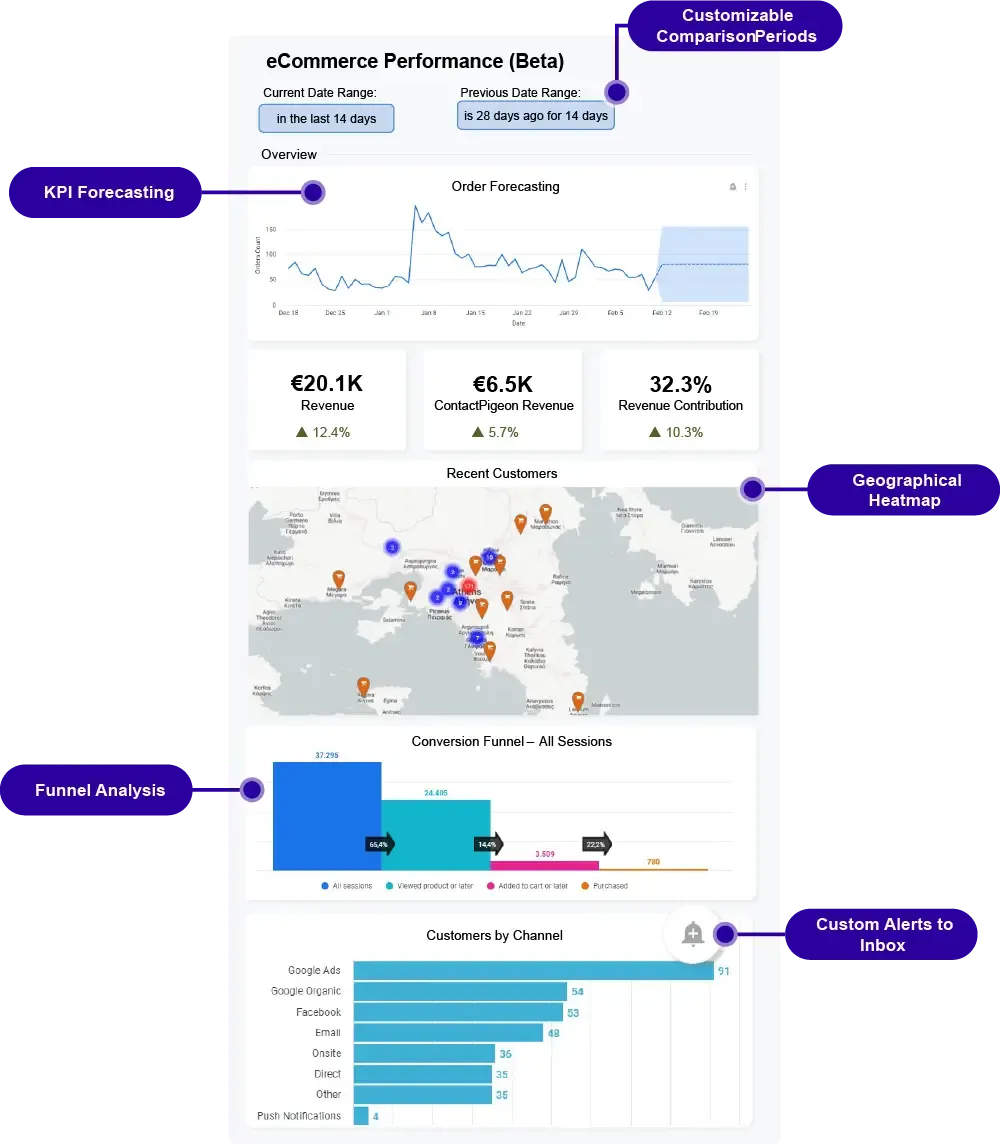
Get a clear snapshot of business performance with essential commerce KPIs like order volume, average order value, and conversion rate.
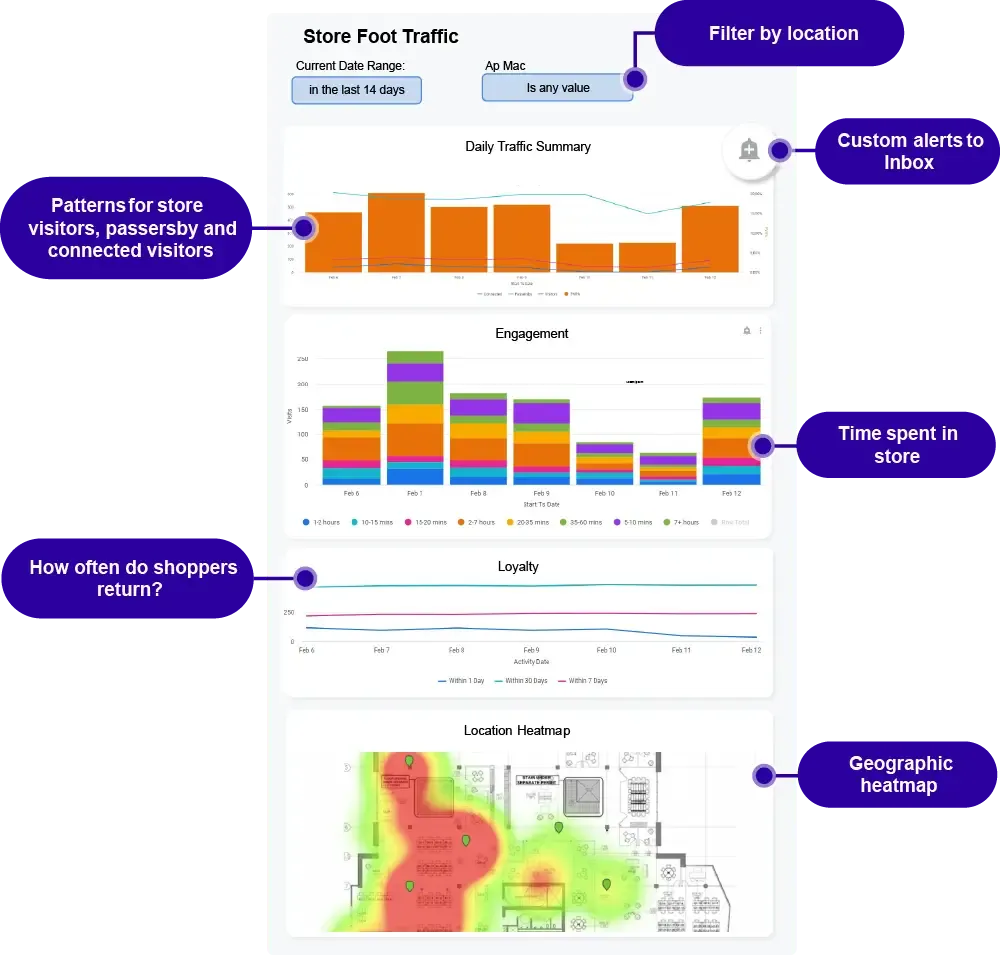
Connect store visits with digital activity, understand in-store behavior and traffic patterns, and use footfall insights to sharpen targeting.
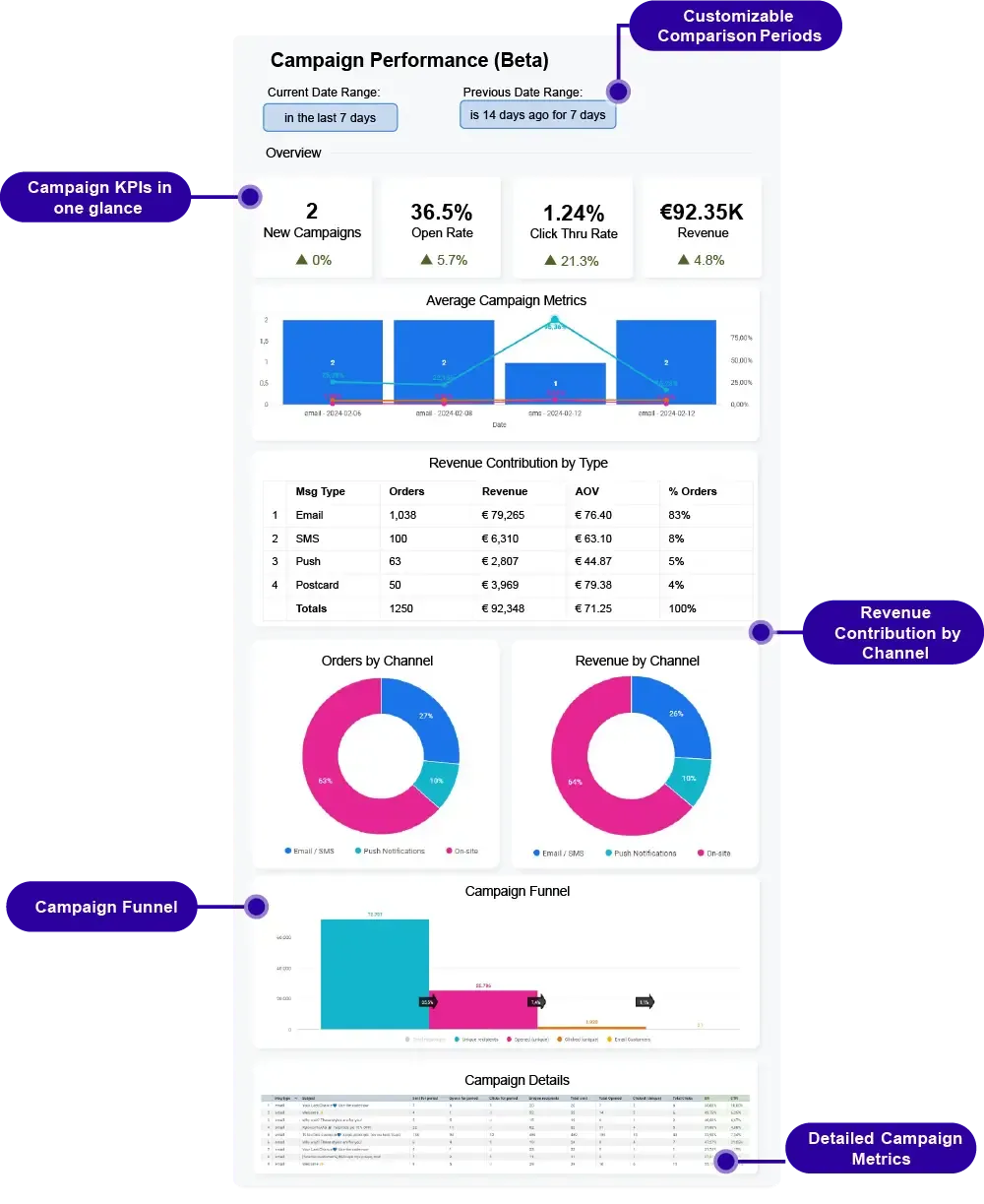
Understand which channels and campaigns drive traffic and revenue with cross-channel attribution and drill-down reporting.
Our goal is to find innovative ways of using data to make informed, verified decisions. ContactPigeon is an important partner in helping us achieve our objectives.
Giorgos Betchavas, Managing Director, SARKK S.A, Tommy Hilfiger & Calvin Klein
Drive efficiency with informed, data-driven decision-making across the organization.




ContactPigeon brings together data, AI, and activation in one platform so every capability works in sync, not in silos. From understanding shoppers to acting in real time, each layer builds on the next.
Real-time customer profile that unifies behavioral, transactional, and engagement data.
Learn MoreUnderstands customers, products, context, and intent to generate recommendations, chat responses, content, and insights aligned with brand voice.
Learn MoreSee what every customer is likely to do next with churn risk, next purchase timing, and product affinity.
Learn MoreDesign journeys that respond instantly to customer intent and scale with live signals.
Learn MoreAutomatically updates segments as customer behavior, purchases, and intent change.
Learn MoreActivate across email, SMS, web, search, and chat natively.
Learn MoreDrag and drop to create, test, and optimize campaigns.
Learn MoreTrack performance, attribution, and ROI with clear reporting.
Learn MoreA Customer Data Platform (CDP) serves as a centralized hub designed to gather customer data originating from diverse touchpoints, aiding in creating a cohesive and comprehensive customer profile. This sophisticated platform delivers a multitude of advantages, including deep and advanced customer insights, the facilitation of personalized marketing campaigns, real-time data synchronization, and the streamlining of operational processes.
Businesses harness the power of CDPs as strategic tools to elevate customer engagement, craft targeted marketing campaigns, and cultivate a unified, personalized experience seamlessly communicated across all channels. A CDP acts as a linchpin for businesses aiming to navigate the intricacies of modern customer-centric strategies effectively.
The impact of a Customer Data Platform (CDP) on the retail customer experience is immense, offering a detailed perspective into the intricacies of customer interactions on a personal level. Armed with unified profiles and real-time data synchronization, businesses harness the capability to craft meticulously targeted and personalized campaigns.
The outcome is striking: a boost in customer loyalty, heightened conversion rates, and a more accurate allocation of marketing resources. Leveraging its efficiency to capture and analyze data from diverse sources, the CDP empowers retailers with a deep understanding of customer behavior and preferences. This, in turn, culminates in the delivery of a shopping experience that is not just satisfactory but intricately tailored to meet individual expectations.
These platforms showcase versatility through a spectrum of use cases, ranging from delivering personalized product recommendations and targeted promotions to optimizing inventory management and enhancing customer service experiences. For an in-depth exploration of ContactPigeon's CDP, along with a comprehensive analysis of its applications, we invite you to book a demo with our trained specialists and get a better grasp.
The major role of a Customer Data Platform (CDP) in supporting omnichannel strategies lies in its seamless integration of data from both online and offline channels. By doing so, it establishes a foundation for a consistent customer experience across various platforms, systems, and sources. This capability empowers retailers to draw insights from the entirety of a customer's interaction history, accumulate data in a centralized system, and monitor their progress easily. This cohesive approach ensures that retailers can effectively meet customers wherever they engage, whether in-store or online, fostering a unified and engaging brand experience that transcends individual channels.
The investment in a Customer Data Platform (CDP) is a critical decision for retail businesses, yielding a substantial return. This is achieved through the enhancement of customer engagement, a boost in conversion rates, and the optimization of marketing efforts, collectively resulting in a significant increase in revenue. The CDP's unique capability to facilitate data-driven decision-making and deliver personalized experiences further solidifies customer loyalty, establishing a foundation for long-term customer value and sustained profitability. In essence, adopting a CDP becomes not only a strategic investment, but a major driver of lasting success.
Although both Customer Data Platforms (CDPs) and Customer Relationship Management (CRM) systems handle customer data, their roles are inherently different. CRMs are primarily designed to oversee customer interactions and relationships, emphasizing the management aspect. CDPs excel in the integration and activation of customer data derived from diverse sources, specifically for strategic marketing endeavors.
Customer Data Platforms (CDPs) specialize in unifying and activating customer data from various sources. They are primarily geared towards marketing activities, enabling businesses to create targeted and personalized campaigns. CDPs excel at handling large volumes of unstructured data, facilitating real-time data synchronization for marketing insights.
On the other hand, Customer Relationship Management (CRMs) systems focus on managing customer interactions and relationships. Their emphasis is on centralizing customer information to improve communication, sales, and customer service. CRMs are ideal for tracking customer interactions, managing sales pipelines, and fostering customer engagement and retention. In essence, while CDPs optimize data for strategic marketing purposes, CRMs center around nurturing and maintaining relationships across various touchpoints.
For a more detailed breakdown of the differences between CDP and CRM, please check out our article here.
A CDP integrates seamlessly with existing marketing and sales technology stacks through APIs and connectors. This integration guarantees compatibility with a spectrum of tools, including Customer Relationship Management (CRM) systems, marketing automation platforms, and analytics tools. In turn, the smooth data flow between systems significantly enhances overall operational efficiency and prevents friction. Consequently, businesses can optimize their existing technology investments, leveraging the power of a CDP to centralize and unify customer data. This synergy empowers organizations to make more informed decisions, execute targeted strategies, and elevate their overall customer engagement efforts.
The selection process for a CDP demands a comprehensive evaluation of scalability, integration ease, data security, customization capabilities, alignment with industry needs, feature set, vendor reputation, and customer support. By carefully weighing these considerations, businesses can make an informed decision, ensuring that the chosen CDP not only meets their immediate requirements but also supports their long-term strategic objectives.
Firstly, scalability plays a pivotal role, ensuring that the selected CDP can accommodate the evolving data needs of a business as it grows. Ease of integration is another critical element. The CDP should seamlessly integrate with existing systems and applications to avoid disruptions to current workflows. Moreover, businesses must prioritize a CDP that implements robust security protocols, safeguarding sensitive customer information from unauthorized access.
Another key factor is customization capabilities, which are integral for tailoring the CDP to meet specific business requirements. Additionally, vendor reputation is a crucial aspect that reflects the reliability and credibility of the CDP provider. Assessing the track record of the vendor in terms of successful implementations and customer satisfaction provides valuable insights into the platform's performance. Lastly, the quality of customer support cannot be understated. A responsive and knowledgeable support team is essential for troubleshooting, addressing concerns, and ensuring that businesses can maximize the potential of the CDP.
Discover 12 essential steps when choosing a retail customer data platform here.
ContactPigeon's solution ensures data security by adopting a multi-layered approach encompassing encryption, access controls, compliance measures, continuous monitoring, and employee training, to fortify our clients' data against potential security threats. Instilling confidence in our customers and meeting the highest standards of data protection, our team implements a comprehensive set of measures to safeguard sensitive information.
ContactPigeon's Customer Data Platform is an additional feature, designed for our enterprise clients, and as such it includes an additional fee in our annual subscription plans. To learn more about our pricing policies, feel free to contact our dedicated Sales Executives to present you with a customizable offer that will reflect your needs and your business goals.
Every plan at ContactPigeon includes a dedicated retail automation expert who will guide and walk you through the onboarding process and the integration. Once the integration is completed, you will be assigned a specific account manager who will handle your account moving forward and will be your main point of contact.
Implementing a CDP does present potential challenges that retailers should consider in order to avoid wasting resources and making inaccurate decisions. You can read our detailed guide about the CDP pitfalls here.